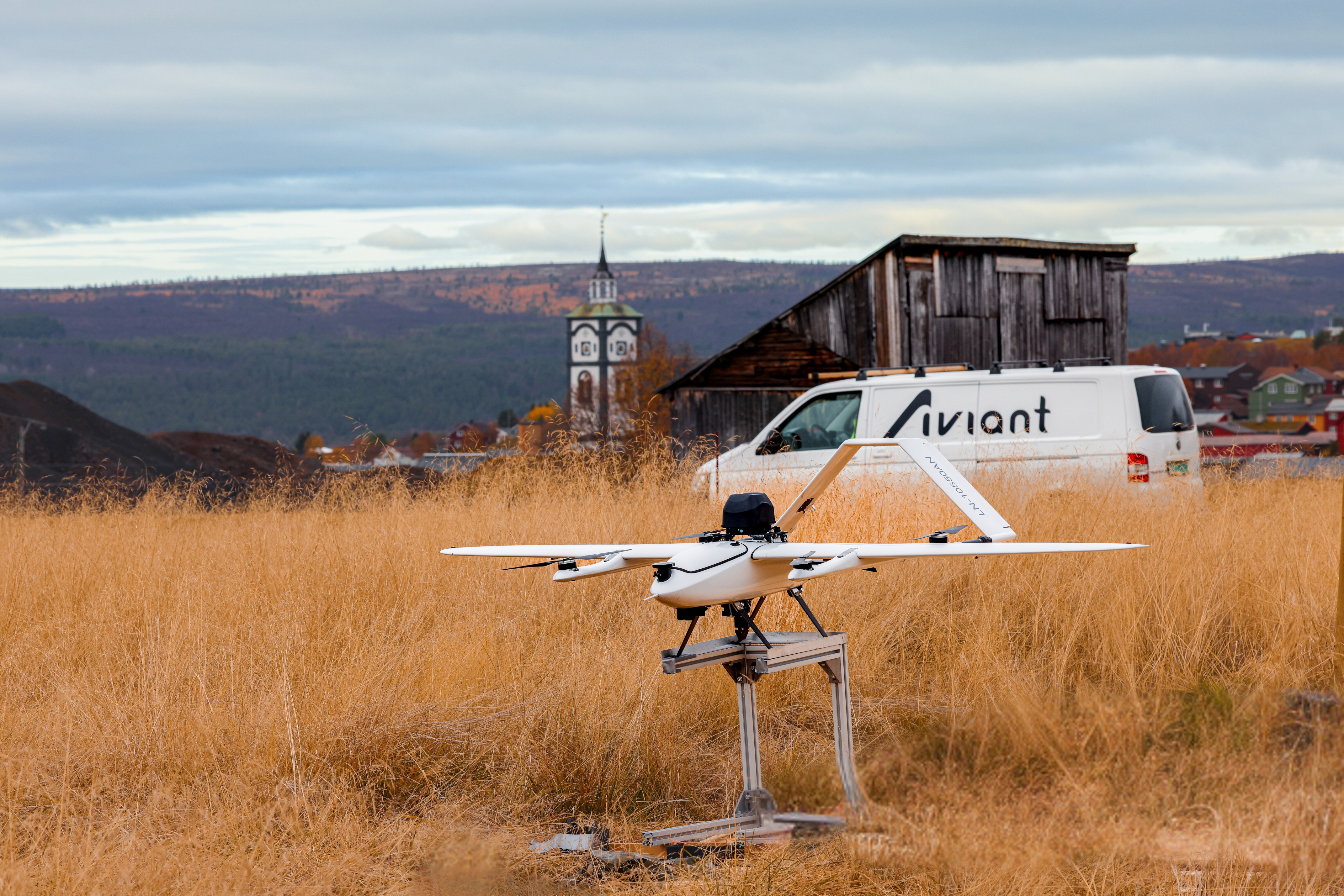
How can drones transform healthcare logistics in rural areas? In collaboration with Røros Municipality and Green Flyway, Aviant conducted a pilot project to test autonomous drone deliveries for home care services. The project explored how drones can support municipalities by reducing transport costs, improving efficiency, and enhancing service delivery for elderly residents.
With a rapidly aging population and increasing demand for home healthcare, this project provided critical insights into the future of sustainable, tech-driven logistics in the public sector.
📌 Project name: Autonomous Drone Delivery for Home Care Services
📍 Location: Røros, Norway
🛩️ Technology partner: Aviant
🤝 Municipal partner: Røros Municipality
🌱 Research & airspace partner: Green Flyway
🚀 Project period: October - December 2024
🕒 Scope: Food & medical supply delivery for home care services
The pilot project aimed to evaluate the potential of drone-based logistics for municipal home care services, focusing on four key areas:
✅ Reducing transport strain on municipal workers – Home care services in Røros cover 325,000 km per year by road. Drone transport could significantly reduce this workload, allowing healthcare staff to focus more on patient care.
✅ Lowering carbon emissions – Drone deliveries cut CO₂ emissions by 96% compared to traditional vehicle transport.
✅ Improving service efficiency – Drone deliveries reduced transport time by 23-33%, ensuring faster, more predictable deliveries.
✅ Exploring real-world challenges – The project assessed operational constraints, including weather conditions, regulatory hurdles, and community acceptance.
The pilot was conducted over multiple phases, with deliveries between Røros Healthcare Center and designated drop-off points at Coop Glåmos and Coop Brekken.
1️⃣ Demonstration & testing – Initial flights assessed feasibility and public acceptance.
2️⃣ Operational drone flights – Over 46 deliveries were conducted, including food and medical supplies.
3️⃣ Performance evaluation – Delivery speed, reliability, and environmental impact were analyzed.
4️⃣ User feedback – Home care workers, patients, and local residents provided insights into the practical implications of drone logistics.
The pilot also investigated the potential for direct-to-home deliveries, reducing the need for centralized drop-off points and streamlining healthcare logistics further.
🔹 Autonomous drones can significantly reduce transport times – especially in rural municipalities where distances are long and resources are limited.
🔹 Regulatory and infrastructure adaptations are required – BVLOS (Beyond Visual Line of Sight) operations need further integration with existing healthcare logistics.
🔹 Community engagement is essential – While most feedback was positive, some concerns regarding noise and visibility were raised, emphasizing the importance of clear communication with residents.
While this was a pilot project, its findings provide a foundation for future healthcare drone logistics, with potential expansion to medical deliveries, urgent transport, and on-demand healthcare support.
This project is part of Aviant’s ongoing work in autonomous drone logistics, developing solutions that enhance healthcare, emergency response, and commercial transport.
For further details or collaboration opportunities, contact us here.

Aviant tries to collect as little information about our site visitors as possible. However, we do collect some data to analyze the web traffic.
In relation with Aviant's use of personal information, you have the right to ask us to:
From time to time we will have to update our privacy statement. Major changes will be clearly informed, and the latest version of the privacy statement will always be available on our website.
Herman Øie Kolden is the privacy officer for aviant.no. If you have questions about privacy on aviant.no, you can reach him on contact@aviant.no.
No data collected on aviant.no is shared with a third party beyond what is described here, unless required by Norwegian law. Details about collected data are given below.
aviant.no does not use cookies for tracking or advertising. Some features store a small amount of data in your browser when you use them:
We use Plausible Analytics to understand how our website is used. Plausible does not use cookies, does not collect or store personal data, and does not track you across websites or devices. All data is aggregated and stored in the EU. We use it based on our legitimate interest in improving our website. It tells us:
When you submit the contact form, we receive your name, email address, phone number and message by email so that we can respond to you. The form is processed on Amazon Web Services in the EU (Stockholm). To protect the form against spam, the contact page uses Google reCAPTCHA, which processes information about your device and how you interact with the page, under Google's privacy policy. The contact page also displays a map from Mapbox, which receives your IP address when the map loads.